
Design Guide: Acoustical Baffles Vs. Acoustical Clouds
Views: 0 Author: Site Editor Publish Time: 2026-06-15 Origin: Site


Modern commercial environments—particularly those featuring exposed concrete decks or expansive open-plan layouts—often suffer from terrible acoustics. While these industrial designs look visually stunning, they actively degrade speech privacy. They also create high levels of unwanted reverberation. Traditional acoustic drop-ceilings are frequently undesirable from a design perspective. In many modern buildings, they are even structurally impossible to implement. Therefore, suspended acoustic treatments become a mandatory architectural requirement.
Still, specifiers frequently struggle when forced to choose between vertical and horizontal orientations. Making the wrong choice can lead to compromised design aesthetics or poor acoustic performance. This guide provides an evidence-based comparison between designing a Baffle Ceiling and specifying acoustic clouds. We focus heavily on acoustic efficiency, installation realities, and spatial integration. By the end of this article, you will learn how to streamline your procurement decision and engineer a better-sounding space.
Key Takeaways
Orientation Drives Function: Baffles hang vertically to disrupt sound waves across expansive ceilings; clouds hang horizontally to provide targeted, localized sound absorption.
Efficiency Multiplier: Both systems outperform direct-mount acoustic ceiling tiles by exposing both sides of the material, effectively doubling the sound-absorbing surface area.
Integration Constraints: A baffle ceiling is typically better for navigating complex MEP (Mechanical, Electrical, and Plumbing) systems, while clouds require broader, uninterrupted ceiling real estate.
Material Versatility: Both solutions are available in PET felt, fabric-wrapped fiberglass, metal, and wood, allowing alignment with both acoustic (NRC) and aesthetic requirements.
Framing the Space: Why Suspended Acoustics Over Direct-Mount?
Before comparing specific suspended systems, we must understand why direct-mount solutions often fall short in modern architecture. Standard drop ceilings or direct-mount panels carry a significant physical limitation. They only utilize one side of the acoustic material. When you glue or screw a panel flat against a drywall ceiling, the back face does nothing. The edges offer negligible sound control. You leave half of the material's potential acoustic performance trapped against the ceiling deck.
Suspended acoustics completely change this performance equation. Hanging materials in open space unlocks massive acoustic advantages. Let us look at the core benefits of moving away from direct-mount applications:
Maximized Surface Area: Hanging materials exposes the front, the back, and the edges. This physical separation from the ceiling deck effectively doubles your functional sound-absorbing surface.
Increased Sabins per Square Foot: Sabins measure the total units of sound absorption. By exposing all sides of a suspended panel, you drastically increase the Sabins achieved per square foot of raw material.
Air Gap Absorption: Sound waves pass through suspended acoustic materials, hit the hard ceiling deck above, and bounce back through the material a second time. This secondary pass captures lower-frequency sounds efficiently.
Furthermore, we cannot ignore architectural reality. Exposed ceiling decks have become an industry standard across corporate offices, restaurants, and educational facilities. Facility managers and architects need solutions that control echo. However, they cannot completely hide the industrial aesthetic. They also cannot block critical HVAC airflow or fire suppression systems. Suspended acoustics offer the exact compromise required for these modern structural demands.
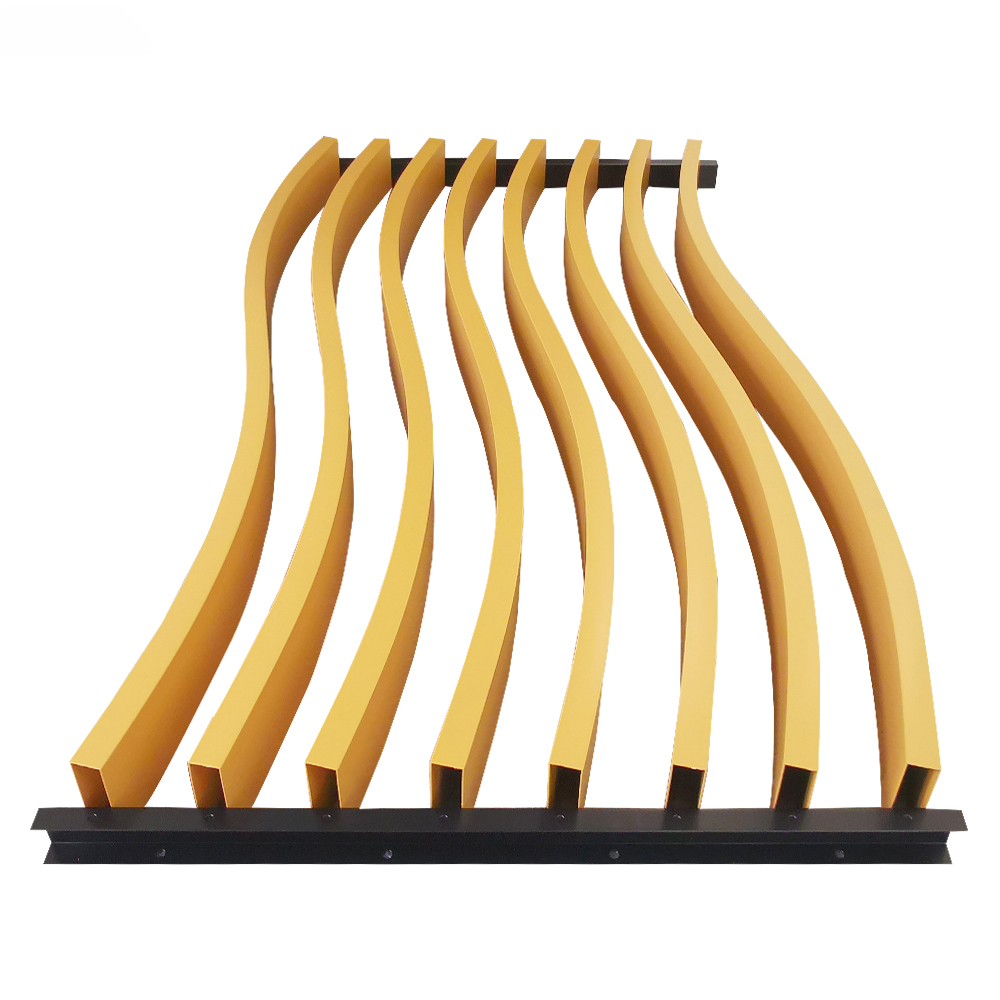
The Baffle Ceiling: Vertical Sound Control and Linear Design
When you need broad, uniform acoustic coverage, vertical orientation is incredibly powerful. Acoustic baffles are linear panels suspended vertically from the ceiling deck. They drop down like blades, creating a distinct visual rhythm across the ceiling plane. A well-designed Baffle Ceiling can completely transform both the acoustics and the visual identity of a massive room.
The acoustic mechanics of baffles rely on horizontal interception. Sound rarely travels straight up and down in a large room. Human voices and ambient noise travel horizontally outward. As these sound waves travel across a room, they repeatedly strike the hanging baffles. They become trapped between the parallel rows. Each time the sound wave hits a baffle, it loses energy. This repeated friction rapidly decays the reverberation time, known technically as RT60.
Ideal Use Cases for Baffles
Because they intercept traveling sound so effectively, baffles excel in specific environments. You should primarily consider them for the following applications:
High-volume spaces: Auditoriums, gymnasiums, and large open-plan offices benefit immensely from vertical sound control.
Linear sightlines: Spaces requiring continuous, uninterrupted visual lines look striking with a cohesive Baffle Ceiling.
Dense MEP layouts: Ceilings crowded with complex MEP layouts present a nightmare for flat panels. Installers can easily space vertical baffles to bypass exposed ducts, conduit, and water pipes.
Implementation Risks and Common Mistakes
Despite their benefits, vertical systems carry specific risks. Dense configurations can severely interfere with light dispersion. If you hang deep baffles too close together, they will block natural light from high windows. They will also block overhead artificial lighting. This creates harsh, unwanted shadowing on the floor below. Always map your lighting plan concurrently with your acoustic layout to prevent dark zones.
Acoustical Clouds: Horizontal, Targeted Sound Absorption
While baffles control sound traveling across a vast space, acoustical clouds take a highly targeted approach. Clouds are acoustic panels suspended horizontally. They hang parallel to the floor, often appearing to "float" effortlessly below the exposed ceiling deck. They can be manufactured in circles, squares, hexagons, or completely custom organic shapes.
The acoustic mechanics of clouds differ significantly from vertical blades. Clouds absorb sound directly rising from the source below them. For example, when people speak around a conference table, the sound goes straight up into the cloud. The material absorbs the primary sound wave immediately. Furthermore, any sound that escapes past the edges hits the hard ceiling deck above. When it bounces back down, the top surface of the cloud captures it. This dual-sided horizontal absorption is incredibly efficient for localized noise.
Ideal Use Cases for Clouds
You should specify horizontal suspended systems when you want to create intimate acoustic micro-environments. They work best in these specific scenarios:
Targeted acoustic zones: Suspend them directly over conference tables, busy reception desks, or specific workstation pods.
Lower ceiling applications: Spaces with slightly lower ceiling heights often feel claustrophobic with vertical blades. Horizontal panels maintain a more open feel while still absorbing echo.
Visual anchoring: Clouds act as architectural canopies. They visually anchor furniture groupings in a massive open-concept room.
Implementation Risks and Common Mistakes
Horizontal clouds consume large amounts of continuous ceiling real estate. This creates serious implementation risks regarding building infrastructure. Large clouds can easily obstruct fire sprinkler dispersion patterns. They can also block essential HVAC return air paths. You must ensure strict adherence to local fire codes, such as NFPA 13 guidelines. You will often need careful coordination with mechanical engineers to maintain proper void ratios around the cloud edges.
Core Evaluation Dimensions: Baffles vs. Clouds
Choosing between these systems requires a balanced evaluation of aesthetics, performance metrics, and material properties. Neither system is universally superior. Your choice depends entirely on the unique goals of your architectural project.
Aesthetic Intent
Visually, these two systems accomplish entirely different goals. Baffles create rhythm and intense directionality. They excel at masking an ugly ceiling deck. By drawing the eye along a linear path, they make occupants look past the messy pipes and ducts above. Clouds, conversely, create intimate, lowered ceiling planes. They do not hide the entire ceiling. Instead, they create visual anchors over specific architectural features, making vast spaces feel human-scaled.
Acoustic Performance Comparison
Specifiers must understand how NRC (Noise Reduction Coefficient) applies differently to suspended products. NRC technically measures a direct-mount application. When comparing suspended systems, you must look at Sabins per object. A single, massive horizontal cloud provides intense localized absorption. To match that exact localized absorption with a Baffle Ceiling, you must increase the spacing density of the vertical blades over that specific zone.
Feature |
Baffle Ceilings |
Acoustical Clouds |
|---|---|---|
Orientation |
Vertical (Linear) |
Horizontal (Parallel to floor) |
Primary Sound Control |
Intercepts horizontal sound wave travel |
Captures direct upward and downward reflection |
MEP Compatibility |
Excellent (easily threads between pipes) |
Moderate (requires large unobstructed areas) |
Visual Effect |
Rhythmic, continuous, masks the upper deck |
Intimate, creates a "canopy" effect |
Material Selection & Fire Ratings
Both orientations leverage the same fundamental acoustic materials. Your material choice impacts the weight, the aesthetic, and the fire rating of your installation.
PET Felt: This recycled plastic material is lightweight, highly customizable, and easy to cut. It is an industry favorite for both vertical and horizontal applications.
Fabric-Wrapped Fiberglass: Fiberglass cores offer premium acoustic ratings. Wrapping them in acoustically transparent fabric provides a broad, sophisticated color palette.
Wood & Metal: These rigid materials deliver high architectural impact. However, they are heavy. Because hard surfaces reflect sound, they often require precise micro-perforations and an acoustic backing layer to achieve the desired sound absorption.
Installation Realities and System Maintenance
Designing a beautiful acoustic system is only the first step. You must also account for how contractors will physically hang the material. Installation realities dictate the structural feasibility of your design.
Mounting Hardware Options
Suspended acoustic systems typically utilize three main types of mounting hardware. Aircraft cable offers a sleek, nearly invisible suspension, making panels look like they are floating. Threaded rod provides rigid, sway-free suspension, which is essential in areas with high HVAC airflow. Unistrut channels often serve as a bridging mechanism. Installers attach Unistrut to the roof deck, and then hang the acoustic elements from the strut, reducing the total number of anchor points drilled into the concrete.
Labor and Time Considerations
A well-planned Baffle Ceiling requires precise, repetitive leveling. Because you are hanging hundreds of individual blades, the suspension points multiply rapidly. If the ceiling deck is uneven, contractors will spend significant time adjusting cable glides to ensure the bottom edge of the layout is perfectly level. Clouds, by contrast, require fewer total suspension points. However, monolithic horizontal panels are awkward to handle. They may demand heavier lifting equipment, such as scissor lifts, depending on the material size and overall weight.
Long-Term Accessibility
Facility maintenance teams need continuous access to the ceiling plenum. They must change air filters, fix leaking pipes, and replace lighting drivers. Vertical blades generally allow easier access to the ceiling deck. A maintenance worker can easily push a ladder up between parallel rows. Large, solid clouds present a difficult barrier. If an HVAC unit sits directly above a massive horizontal panel, maintenance teams may have to uninstall the acoustic treatment just to perform basic repairs.
Specifier’s Shortlisting Logic: Which System is Right for Your Project?
Making the final decision requires practical, logic-driven shortlisting. Review your architectural constraints and match them to the strengths of each system.
Choose a Baffle Ceiling if:
You are designing for a space with ceiling heights over 12 feet.
You need broad, even sound control distributed across a massive, open footprint.
You must navigate complex overhead pipes, exposed sprinkler mains, and bulky HVAC ducts.
You want to draw the occupant's eye away from the chaotic roof deck above.
Choose Acoustical Clouds if:
You need to fix severe, localized noise issues over specific collaboration zones.
You want to create a cozy, "room within a room" feel without building physical walls.
You are working with slightly lower exposed ceilings where vertical drops might feel oppressive or hit people's heads.
You have wide, uninterrupted gaps between overhead lighting and mechanical fixtures.
The Hybrid Approach
Many experienced specifiers refuse to choose just one. You can mix these systems seamlessly within the same building. A hybrid approach maintains a unified material palette while solving distinct acoustic problems. For instance, you might suspend large horizontal clouds directly over the open-plan workstation clusters. Then, you can transition into linear vertical blades down the adjacent corridors and walkways. This hybrid design delivers targeted absorption where people talk, and broad reverberation control where people walk.
Conclusion
Designing modern commercial ceilings requires balancing structural realities with severe acoustic demands. As we have explored, neither system is objectively superior. The right choice hinges entirely on your specific ceiling height, the density of your MEP infrastructure, and whether your acoustic problem is localized or space-wide.
For your next steps, we recommend taking a highly analytical approach. First, physically map your ceiling infrastructure to identify unobstructed zones. Second, calculate the exact Sabins required to hit your target RT60 for the room's designated use. Finally, request material samples and mounting hardware specifications from your manufacturer. Verifying these structural realities early ensures your acoustic design looks stunning, installs smoothly, and performs exactly as intended.
FAQ
Q: What is the difference between a baffle ceiling and standard acoustic panels?
A: Standard acoustic panels are mounted flush against a wall or flat against a ceiling deck. They only absorb sound on one visible side. A Baffle Ceiling is suspended vertically in open space. This exposes both sides and the edges of the material, delivering vastly superior sound absorption per square foot of material.
Q: Can you install acoustic clouds and baffles in the same room?
A: Yes. Acoustic specifiers frequently mix both systems. You can utilize horizontal clouds directly over conference tables or workstations for targeted sound absorption. You can then install vertical blades in adjacent walkways and transitional spaces for broad, space-wide reverberation control.
Q: How do suspended acoustic ceilings impact fire sprinklers?
A: Both systems require strict, code-compliant spacing. Vertical blades are generally easier to space around existing sprinkler heads without obstructing water flow. Large horizontal clouds may require drop-through sprinkler integration or specific ceiling void ratios to pass local fire safety inspections.
Q: Do acoustic baffles or clouds perform better for speech privacy?
A: Clouds are highly effective at preventing voice transmission from a specific table from bouncing directly off the ceiling deck. Baffles excel at stopping the general carry of ambient noise across a large, open room. For pure localized speech privacy, clouds generally perform better.


