
The Benefits Of Using Mirror Finish Stainless Steel Sheets
Views: 0 Author: Site Editor Publish Time: 2026-06-04 Origin: Site


High-end architectural and commercial design requires materials delivering striking visual impact alongside rigorous structural performance. Designers consistently face a complex materials challenge. Traditional glass mirrors are fragile and excessively heavy. They often fail strict commercial safety codes. Meanwhile, standard metals lack the required reflective clarity for aesthetic applications.
Super #8 mirror finish stainless steel effectively bridges this structural gap. It provides a shatterproof, highly reflective surface. This guide evaluates the measurable benefits, installation realities, and critical procurement criteria for mirror stainless steel. We focus specifically on high-ROI architectural elements. Incorporating a Mirror Stainless Steel Ceiling solves complex structural demands while completely transforming overhead commercial spaces. You will learn how to specify the right grade, prevent reflective distortion, and ensure flawless long-term installations.
Key Takeaways
Safety & Compliance: Mirror finish stainless steel provides the reflective qualities of glass without the shattering risk, easily meeting strict commercial fire and safety codes.
Spatial Enhancement: Highly reflective surfaces amplify natural light and create the illusion of expanded vertical space, making them ideal for ceiling and lobby applications.
Long-Term ROI: Exceptional corrosion resistance (especially in 304 and 316 grades) ensures minimal degradation, reducing lifecycle replacement costs.
Installation Reality: Achieving a distortion-free reflection requires careful specification of sheet thickness (gauge) to prevent "oil canning" during installation.
Defining the Standard: What Qualifies as a True Mirror Finish?
Buyers often confuse standard polished stainless steel with a true mirror finish. This common procurement mistake leads to disappointing, cloudy, or heavily grained results. Standard polishing leaves microscopic grooves on the metal surface. These grooves scatter light. They destroy the sharp optical clarity required for architectural applications. You cannot achieve true reflection simply by buffing standard steel.
The Super #8 finish represents the industry benchmark for ultimate reflectivity. Achieving this grade demands a rigorous, multi-step mechanical process. Fabricators use progressively finer abrasives to smooth the metal. Finally, they apply specialized buffing compounds. This meticulous process removes all visible polishing lines. It yields a surface practically indistinguishable from standard glass mirrors. We must understand this distinction to set accurate project expectations.
While highly reflective, achieving absolute glass-like perfection in metal depends heavily on physical factors. Substrate flatness plays a crucial role. The gauge of the sheet directly impacts optical clarity. Metal remains flexible. Any underlying bump or warp will telegraph through the reflective surface. Proper specification ensures the material mimics glass without inheriting its fragility.
Core Performance Benefits for Commercial Architecture
Structural Integrity and Shatter Resistance
Stainless steel offers unparalleled structural integrity when compared directly against traditional glass mirrors. Glass features incredibly low tensile strength. It shatters upon significant impact. This limits its use in modern public spaces. Stainless steel, conversely, absorbs kinetic energy. It yields rather than breaking. It maintains form under extreme stress.
This shatter resistance proves vital in high-traffic or high-risk zones. Elevators, transport hubs, and public spaces demand materials capable of surviving daily abuse. If a heavy object strikes a steel panel, it might dent. It will never shatter into dangerous shards. This characteristic dramatically lowers liability risks for property developers.
Hygiene and Maintenance Efficiency
Commercial environments require materials prioritizing hygiene. Stainless steel features inherently non-porous surface characteristics. Bacteria and pathogens cannot penetrate the surface. They remain exposed, making them easy to eliminate. Healthcare facilities and commercial kitchens rely heavily on these hygienic properties.
Sterilization processes remain straightforward and efficient. Maintenance teams can easily sanitize the metal using hospital-grade disinfectants. You must strictly avoid abrasive cleaners to protect the polish. However, standard liquid sanitizers wipe away effortlessly. This ensures maximum cleanliness without degrading the visual appeal.
Weight Reduction and Scalability
Architectural rollouts frequently struggle against weight limitations. Heavy glass installations demand massive structural reinforcement. This increases material expenses and labor hours. Assess the weight-to-surface-area ratio carefully. Mirror stainless steel provides comparable reflectivity at a fraction of the weight, depending on the chosen gauge.
This massive weight reduction facilitates large-scale architectural designs. Teams can maneuver larger panels efficiently. They require less heavy lifting equipment on site. The building framework carries significantly less dead load. This structural efficiency allows designers to push creative boundaries further.
Performance Comparison Chart: Glass vs. Mirror Stainless Steel | ||
Feature | Traditional Glass Mirror | Super #8 Stainless Steel |
|---|---|---|
Shatter Risk | High (Brittle) | Zero (Yields to impact) |
Weight Profile | Very Heavy | Light to Moderate |
Formability | Rigid / Flat Only | Highly Bendable / Curvable |
Hygiene | Good | Exceptional (Non-porous) |
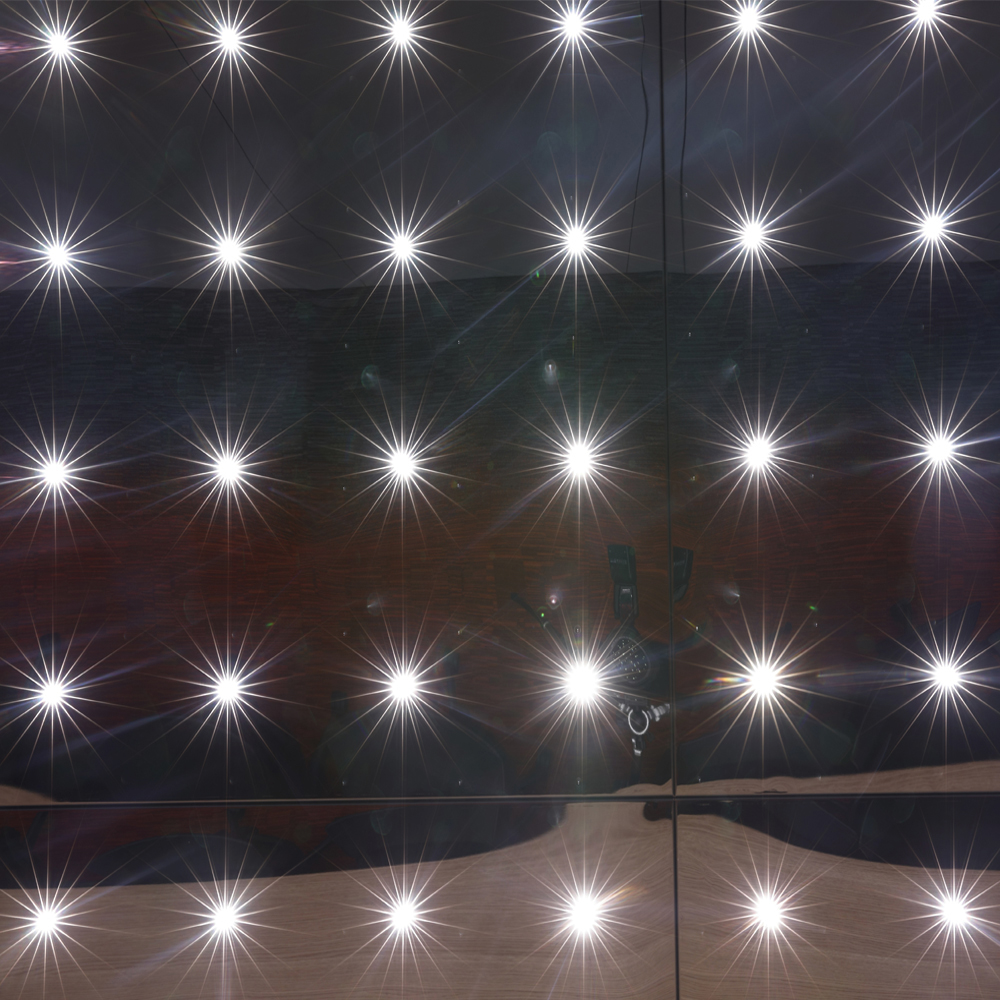
Spotlight: Evaluating the Mirror Stainless Steel Ceiling Application
Architects constantly seek innovative ways to elevate interior spaces. The Mirror Stainless Steel Ceiling serves as the ultimate bottom-of-funnel application for this advanced material. It merges aesthetic brilliance with unmatched safety. Ceilings present unique design challenges. They must hide complex HVAC systems while contributing to the overall room ambiance. Mirror metal panels achieve both goals effortlessly.
Spatial dynamics shift dramatically when you introduce overhead reflections. Ceiling reflections double the perceived height of commercial lobbies. They transform cramped retail spaces into expansive galleries. Hospitality venues utilize this trick to create grand, luxurious atmospheres. The mirrored surface draws the eye upward. It creates an optical illusion of infinite vertical space.
Integration capabilities represent another major advantage. Modern architecture demands multi-functional materials.
Lighting: The polished finish amplifies LED fixtures and natural sunlight. It bounces light deeper into the building interior. This reduces required electrical energy loads.
Acoustics: Hard surfaces usually ruin room acoustics. However, fabricators can micro-perforate stainless sheets. They integrate acoustic backing seamlessly. This absorbs sound waves without compromising the visual mirror effect.
HVAC Integration: Custom panels can accommodate diffusers and sprinkler heads precisely.
We must also address strict overhead safety codes. Installing heavy glass overhead poses extreme liability risks. Earthquakes or structural shifts could cause catastrophic shattering. Stainless panels securely mechanically fastened pose zero shattering risk to occupants below. They fulfill stringent building regulations while delivering uncompromising beauty.
Procurement Criteria: Shortlisting the Right Alloy and Gauge
304 vs. 316L Stainless Steel
Choosing the correct alloy dictates the success of your installation. Grade 304 stands as the cost-effective standard for most interior projects. It performs flawlessly in climate-controlled environments. Retail stores, hotel lobbies, and office corridors rely heavily on 304 stainless steel. It resists normal atmospheric corrosion perfectly.
Grade 316L represents the necessary upgrade for harsh conditions. It contains added molybdenum. This element drastically improves resistance against chlorides and industrial chemicals. You must specify 316L for exterior facades and coastal environments. Spaces facing high humidity, like indoor pools or marine applications, also demand this superior alloy. Specifying 304 in these harsh zones leads to rapid pitting and rust.
Specifying Gauge Thickness to Prevent "Oil Canning"
Optical distortion ruins the mirror effect. The industry refers to this distortion as "oil canning." Thin sheets lack structural rigidity. Temperature fluctuations and installation tension cause them to warp. This creates a highly undesirable "funhouse mirror" effect. It immediately degrades the perceived quality of the space.
You must specify thicker gauges to prevent this crucial risk factor. We highly recommend using 16 or 18-gauge steel for large architectural installations. Thicker metal resists warping under tension. For expansive, flat applications, consider laminated honeycomb backing panels. These composite systems bond a thin mirror sheet to a rigid aluminum honeycomb core. They ensure absolute optical flatness while keeping overall weight manageable.
To summarize gauge selection criteria:
20+ Gauge: Too thin for large flat panels; high risk of oil canning. Use only for small trims.
18 Gauge: Good balance of weight and rigidity for medium panels.
16 Gauge: Excellent rigidity for large panels; optimal for direct mechanical fastening.
Honeycomb Laminated: The ultimate solution for massive panels demanding flawless optical flatness.
Implementation Realities and Risk Mitigation
Successful installation requires extreme care from fabrication to final handover. Handling precautions dictate the workflow. Fabricators apply a laser-grade PVC protective film over the polished surface. This film must remain completely intact during cutting, bending, and transport. Workers must handle the panels wearing clean gloves. You remove this protective film only after completing final installation and site clean-up.
Installation techniques vary based on panel size and substrate condition. You can choose mechanical fastening or structural adhesives. Mechanical clips allow for thermal expansion. Adhesives provide a clean, fastener-free aesthetic. Regardless of the method, the underlying substrate must be perfectly level. Uneven walls or ceilings create surface tension. This tension causes immediate visual distortion across the reflective face.
Maintenance protocols define the long-term appearance of the installation. We must train facility management teams on strict cleaning guidelines. They should use only clean microfiber cloths. Standard paper towels will scratch the surface. They must use specific stainless steel glass cleaners. Strictly avoid chlorides, bleach, or abrasive scouring pads. These harsh chemicals permanently etch and destroy the #8 finish. Proper care ensures the panels remain brilliantly reflective for decades.
Conclusion
Mirror finish stainless steel represents far more than a simple decorative choice. It serves as a highly structural and compliance-driven solution for high-end commercial spaces. By bridging the gap between aesthetic brilliance and rigorous safety standards, it solves fundamental architectural challenges. The material guarantees peace of mind in high-traffic environments.
Your decision logic remains straightforward. If the project requires high reflectivity, zero shatter risk, and long-term durability, #8 stainless stands as the optimal specification. It outperforms traditional glass across almost every commercial metric. It delivers a modern, sophisticated aesthetic while ensuring absolute occupant safety.
Take action early in your design phase. Request physical material samples to inspect optical clarity firsthand. Consult directly with a qualified fabricator regarding specific gauge requirements for your panel sizes. Review engineered suspension systems carefully if planning overhead installations. Proper planning guarantees a flawless, breathtaking architectural result.
FAQ
Q: Is a mirror stainless steel ceiling heavier than a standard suspended ceiling?
A: Yes, it typically requires a reinforced grid or specific mechanical suspension system compared to lightweight standard mineral tiles. However, integrating a Mirror Stainless Steel Ceiling remains significantly lighter and exponentially safer than attempting to suspend traditional heavy glass mirrors overhead.
Q: Can a true #8 mirror finish be scratched?
A: Yes. While the underlying stainless steel itself is incredibly durable, the highly polished surface can show micro-scratches if cleaned improperly. You must use soft microfiber cloths and avoid any abrasive materials or harsh chemical cleaners. Strict maintenance protocols ensure the finish stays pristine.
Q: Will mirror stainless steel distort reflections like a funhouse mirror?
A: It can, due to a physical phenomenon called "oil canning." This distortion happens when thin sheets warp under tension. You mitigate this by specifying a thicker gauge, ensuring a completely flat installation substrate, or opting for composite honeycomb backing panels to guarantee absolute rigidity.


